
If you’ve ever had to explain to your board why a plastic bag on a powerline caused a two-hour outage affecting 15,000 customers, you know exactly what we’re talking about. Or maybe you’re the one getting calls at 3 AM because overgrown branches sparked another fire in a high-risk zone.
The reality is, traditional grid maintenance is breaking down. Crews are expensive, hard to find, and frankly, it’s getting dangerous out there. Meanwhile, compliance requirements keep getting stricter, and one bad fire season can wipe out years of careful budget planning.
That’s why utilities across Australia are quietly testing something that sounds like science fiction but works like magic: laser-powered vegetation management and debris removal.
The real problem nobody talks about
Let’s be honest about what’s actually happening in the field:
Your best trimming crew costs $180+ an hour, and they’re booked solid for the next three months. When you finally get them out, they spend half the day just getting access to the problem area. Then they cut way more than necessary because it’s easier than making multiple trips.
Meanwhile, that kite that’s been hanging on the Suburban Road line for two weeks? Your crew won’t touch it without a planned outage, which means paperwork, notifications, and angry customers. So it sits there, waiting for the next storm to turn it into a fault.
And don’t get started on fire season. The regulators want wider clearance zones, the environmentalists want minimal cutting, and the insurance company wants proof you’re doing everything possible to prevent ignitions. Good luck threading that needle with a chainsaw.
International deployments of smart grid laser cleaning system
Here’s what changed everything for the utilities already using the laser technology.
Japan: Tokyo Electric Power Company (TEPCO) and Smart Grid Modernisation
- Smart Grid Scale: TEPCO, one of the world’s largest utilities, has integrated advanced smart grid technologies, including the laser-based maintenance system, across its network of over 20 million smart meters and devices.
- Operational Impact: TEPCO’s use of laser cleaning supports rapid response to grid issues, reduces manual intervention, and helps maintain infrastructure in densely populated and high-risk areas.
- Data-Driven Maintenance: The integration of laser cleaning with smart grid monitoring enables predictive maintenance, reducing the risk of outages and supporting the integration of renewable energy sources.
The technology removes vegetation 4X faster than manual methods and costs 30% less. But here’s the part that matters: you’re not putting crews at risk, you’re not causing unnecessary outages, and you’re not over-clearing just to avoid coming back.
How it actually works
Three steps, and it’s simpler than you think:
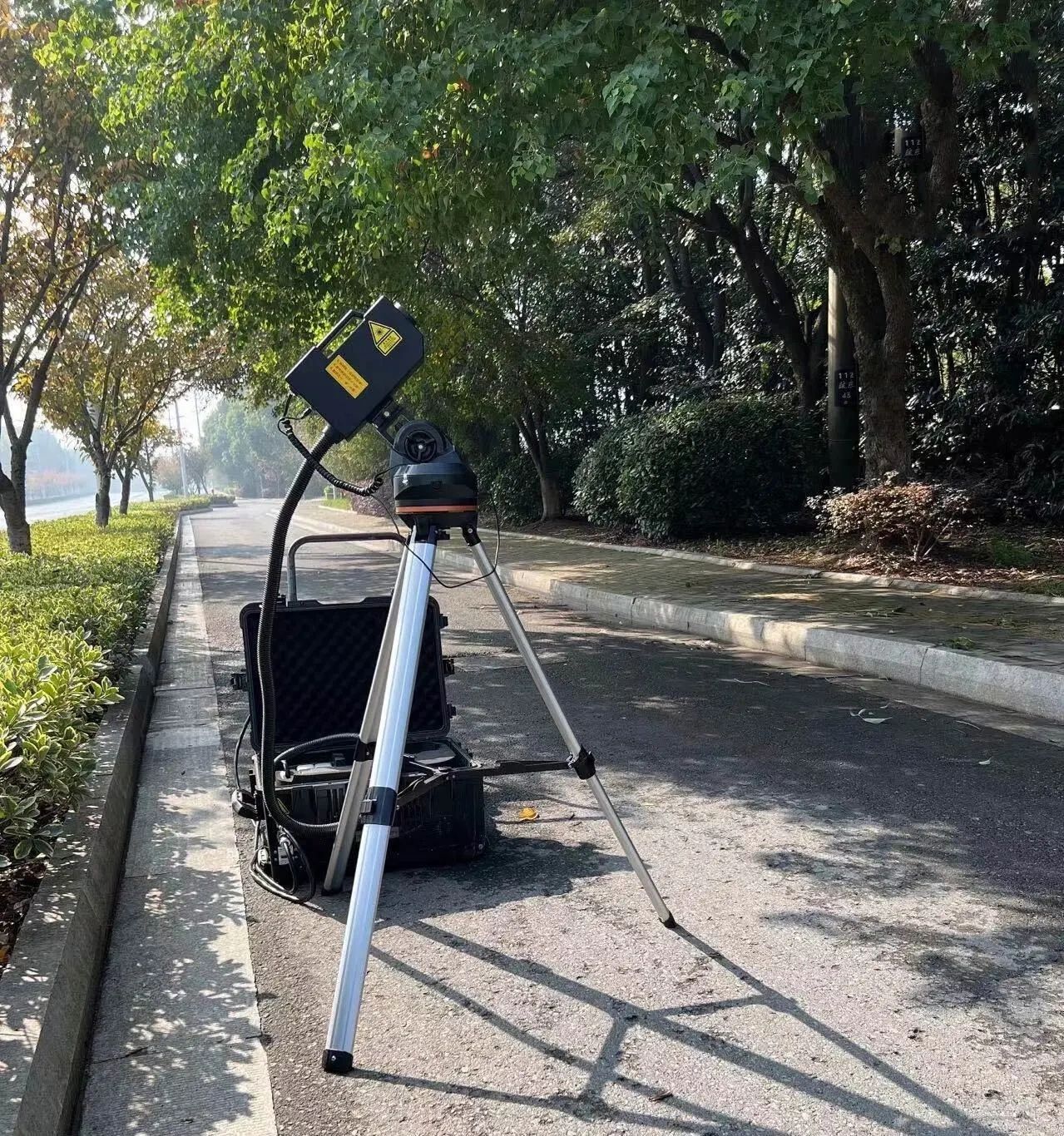
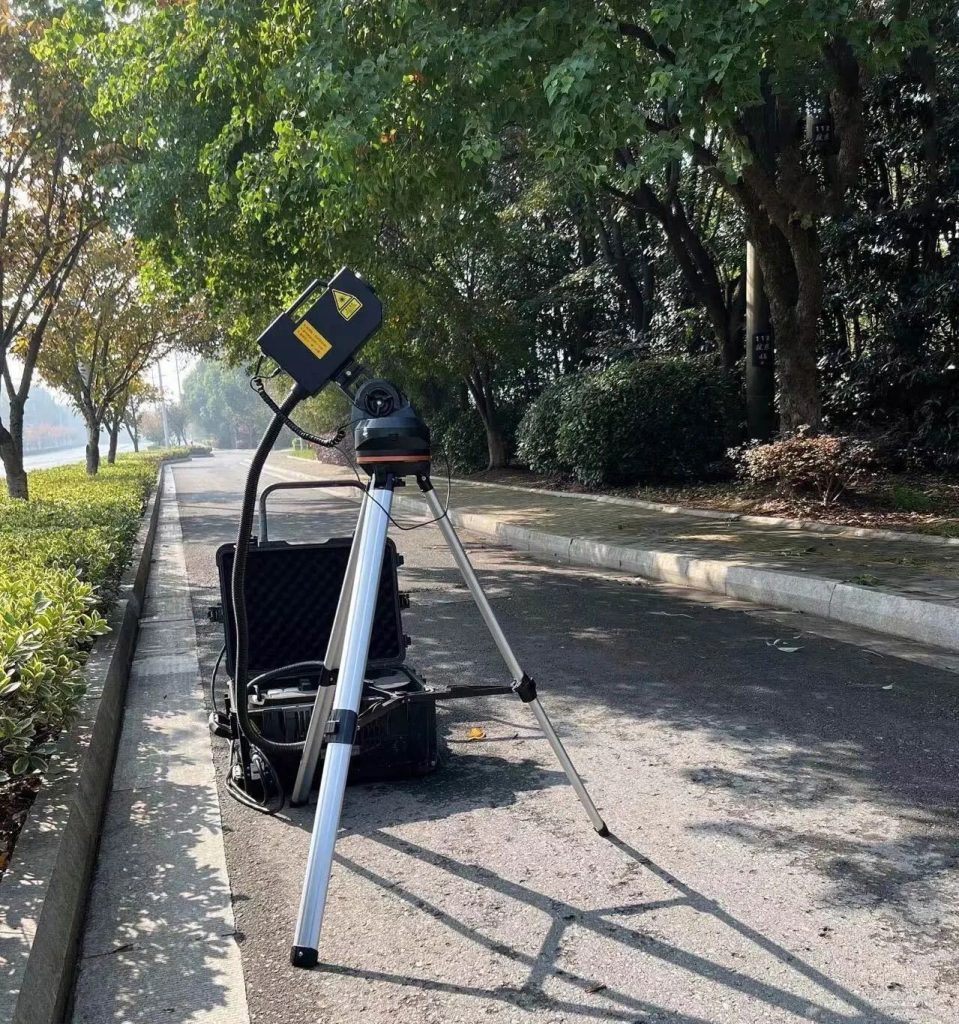
- Set up from safe distance: Position the laser system up to 400 meters away from the problem. No road closures, no bucket trucks, no crews working near live equipment.
- Aim and target: Use the camera system to zoom in on exactly what needs removing – could be a branch, a balloon, or plastic sheeting. The targeting is surgical.
- Activate and done: The laser burns through the material in seconds. It falls away, problem solved. The whole process takes minutes, not hours.
The system includes all the safety features you’d expect – proximity sensors, emergency stops, key switches – but operates from a safe distance that traditional methods can’t match.
What this means for your operation
- For utility managers: You’re not explaining outages caused by debris that could have been removed without downtime. Your vegetation management budget becomes predictable instead of reactive. And your insurance company loves the proactive fire prevention.
- For maintenance contractors: You can bid on jobs that were previously too dangerous or expensive. Your crews stay on the ground, your equipment utilisation improves, and you can handle multiple sites per day instead of one.
- For emergency services: You can actually address fire risks before they become fires. High-risk vegetation that was previously inaccessible becomes manageable, and you’re not scrambling during fire season.
The numbers that matter
Here’s what early adopters are seeing:
- 62% fewer ignitions in areas where laser vegetation management is used
- 4X faster removal compared to traditional trimming methods
- 30% lower costs than manual crews for most applications
- Zero safety incidents related to electrical contact (because there isn’t any)
More importantly, the technology handles situations that traditional methods struggle with: foreign objects on live lines, precision trimming around sensitive equipment, and accessing difficult terrain without road closures.
Real-world applications
This isn’t theoretical anymore. The technology is being used for:
- Routine vegetation management: Clearing branches that are getting too close to lines, but only the problem areas, not everything in sight.
- Emergency response: Removing objects like kites, balloons, and plastic sheeting that cause faults and outages.
- Fire prevention: Proactively clearing high-risk vegetation before fire season, especially in areas that are hard to access.
- Precision work: Targeting specific problem branches around substations, switching equipment, and other sensitive infrastructure.
What about safety and compliance?
The system meets AS/NZS IEC 60825 laser safety standards and includes comprehensive operator training. The key difference is that operators work from a safe distance rather than near live equipment.
Multiple safety systems prevent accidental exposure, including proximity detection that shuts down the laser if anyone enters the danger zone. It’s actually safer than putting crews near high-voltage equipment with chainsaws.
Making the business case
For most utilities, the return on investment is straightforward:
- Reduced emergency call-outs (because problems are prevented, not just fixed)
- Lower insurance premiums (proactive fire prevention documentation)
- Faster response times (no need to coordinate outages for simple debris removal)
- Reduced regulatory risk (precision clearing meets environmental requirements)
The technology pays for itself through avoided costs, not just direct savings.
Getting started without the bureaucracy
The best part? You don’t need to revolutionise your entire operation. Start with pilot projects on problem areas where traditional methods aren’t working well. Use it for emergency response situations where speed matters. Build experience with the technology before expanding to routine maintenance.
Most utilities begin with specific use cases: foreign object removal, high-risk vegetation spots, or areas where access is difficult. Once crews see how it works, they find more applications.
The bottom line
Traditional grid maintenance is getting more expensive, more dangerous, and less effective every year. The utilities that figure out laser technology first will have a significant advantage in safety, cost management, and regulatory compliance.
This isn’t about replacing everything you’re doing – it’s about having the right tool for situations where chainsaws and bucket trucks aren’t the answer.
The question is whether you want to be explaining why you’re still using 20th-century methods to solve 21st-century problems, or whether you want to be the utility that others are trying to catch up to.
Curious about how this would work for your specific situations? Let’s talk about a pilot project that addresses your biggest maintenance headaches without disrupting your current operations. Simply drop us a line here.